
More Animal Coloring Pages


Fun History
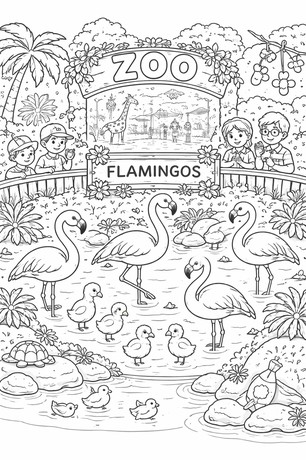
Flamingos are striking wading birds recognized by their long legs, curved necks and bright pink plumage, which comes from pigments in the algae and crustaceans they eat. These social birds live in large flocks and perform synchronized courtship dances that involve head-turning and wing-flapping. They inhabit shallow lakes and lagoons on several continents and often stand on one leg while resting to conserve body heat. In ancient Egypt and Rome, flamingos were admired for their beauty; today they are symbols of tropical elegance and are celebrated in lawn ornaments and art. Flamingos feed by sweeping their heads upside down through the water, using specialized beaks to filter out tiny organisms.
Flamingos are famous for color, but they are not born bright pink. Their feathers become more vivid because of pigments in the food they eat, which is one reason flamingo groups can look different in different places. Their curved necks, long legs, and one-leg resting pose made them popular subjects in travel writing and decorative art.
The Flamingo scene connects with the long tradition of people learning about wild animals through drawings, travel stories, field guides, and later zoo signs and nature films. Safari and zoo imagery often highlights the details that make each species easy to remember, such as markings, body shape, horns, beaks, tails, or habitat clues. Those visual details matter because they help distinguish one species from another even at a quick glance. Over time, animals like this became some of the most recognizable subjects in illustrated nature collections. That gives the page a link to both natural history and the history of animal illustration.
About This Printable
Download this free printable coloring page or print instantly. Great for kids, preschool, and classroom activities.
Flamingos are instantly recognizable with their vivid pink feathers and graceful one-legged stance, making this flamingo coloring sheet a favorite among kids who love elegant, colorful animals. Young artists get to decide just how pink — or how creative — to go with the plumage.
This is a wonderful printable for exploring why flamingos turn pink (it's the shrimp and algae they eat!), making it perfect for science-curious classrooms and homeschool nature studies. It's also a natural fit for tropical or bird-themed party activity tables where kids can take their finished sheets home as keepsakes.
Related Coloring Pages
- Elephant Coloring Page
- Giraffe Coloring Page
- Lion Coloring Page
- Monkey Coloring Page
- Panda Coloring Page
- Penguin Coloring Page
- Reptile Zoo Coloring Page
- Zebra Coloring Page
- Free Printable Animal Coloring Pages
- Horse Coloring Sheet
- Chicken Coloring Sheet
- Goat Coloring Sheet
- Duck Coloring Sheet
- Donkey Coloring Sheet
- Rhino Coloring Sheet
- Cheetah Coloring Sheet
- Hippo Coloring Sheet
- Crocodile Coloring Sheet
- Gorilla Coloring Sheet
Frequently Asked Questions
Why are flamingos pink?
Flamingos get their pink color from carotenoid pigments in the algae and crustaceans they eat. Without this diet, flamingos are actually white — captive flamingos need supplemental carotenoids in their food to maintain their color. The intensity of the pink signals health and foraging success.
How do flamingos stand on one leg?
Flamingos stand on one leg effortlessly because of a passive locking mechanism in their legs — they can lock a straight leg in place without using muscle effort, making one-legged standing actually less tiring than standing on two. It also conserves body heat.
Is this coloring page free to download and print?
Yes, completely free. Every coloring sheet on PrintColoringSheet. com is free for personal and non-commercial classroom use. No sign-in, no subscription, and no watermarks — just click Download or Print and you're ready to color.
What age is this coloring page suitable for?
These coloring sheets work well for a wide age range. The bold outlines are easy for toddlers and preschoolers (ages 2–4) to color freely, while the subject detail gives older children (ages 5–10) plenty to work with. Many adults enjoy them too.