More Safari Animal Coloring Sheets
Fun History
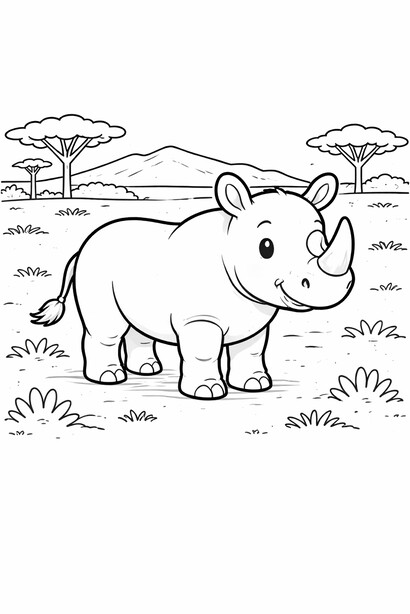
Rhinoceroses are large herbivores known for their thick skin and one or two horns made of keratin. Their ancestors roamed the Earth millions of years ago; fossils show some prehistoric species were even larger than modern elephants. Five species of rhino survive today in Africa and Asia, but many are critically endangered due to poaching and habitat loss. Efforts to save rhinos include protecting habitats, anti-poaching patrols and relocating animals to secure reserves. Rhinos communicate through scent markings and vocalizations and can charge at high speeds when threatened.
Rhinoceroses became famous for their armor-like appearance, and early reports about them sometimes sounded almost mythical. In reality, the horn is made of keratin, the same material found in hair and nails, not solid bone. Different rhino species once ranged across Africa and Asia, and their heavy bodies hide a surprising ability to run fast when needed.
The Rhino scene connects with the long tradition of people learning about wild animals through drawings, travel stories, field guides, and later zoo signs and nature films. Safari and zoo imagery often highlights the details that make each species easy to remember, such as markings, body shape, horns, beaks, tails, or habitat clues. Those visual details matter because they help distinguish one species from another even at a quick glance. Over time, animals like this became some of the most recognizable subjects in illustrated nature collections. That gives the page a link to both natural history and the history of animal illustration.
About This Printable
Download this free printable coloring sheet or print instantly. Great for kids, preschool, and classroom activities.
The rhinoceros is one of the most ancient-looking animals on Earth — a living link to the prehistoric past that children find both awe-inspiring and fascinating. With its dramatic horn, armored-looking skin folds, and massive, barrel-shaped body, the rhino is an unmistakable subject for a coloring sheet that kids approach with genuine respect and curiosity.
Rhinos are also one of the most endangered large animals on the planet, making this coloring sheet a natural springboard for conversations about conservation, wildlife protection, and what children can do to care about the natural world. Use it for African safari unit studies, wildlife conservation lessons, and alongside the lion, giraffe, elephant, and cheetah sheets for a comprehensive African savanna coloring collection.
Related Animal Coloring Sheets
Frequently Asked Questions
How many rhino species are there?
There are five living rhino species: the white and black rhinos of Africa, and the greater one-horned, Sumatran, and Javan rhinos of Asia. All five are endangered or critically endangered. The white rhino is the largest, with males reaching 5,000 pounds.
What is a rhino horn made of?
Rhino horns are made of keratin — the same protein found in human fingernails and hair — not bone. They grow throughout the rhino's life and can regrow if damaged. Tragically, illegal poaching for rhino horn (used in some traditional medicines despite no proven medical value) is the primary threat to rhino survival.
Is this coloring page free to download and print?
Yes, completely free. Every coloring sheet on PrintColoringSheet. com is free for personal and non-commercial classroom use. No sign-in, no subscription, and no watermarks — just click Download or Print and you're ready to color.
What age is this coloring page suitable for?
These coloring sheets work well for a wide age range. The bold outlines are easy for toddlers and preschoolers (ages 2–4) to color freely, while the subject detail gives older children (ages 5–10) plenty to work with. Many adults enjoy them too.